

What Is a Chatterbait?
- phil32990
- May 12
- 3 min read
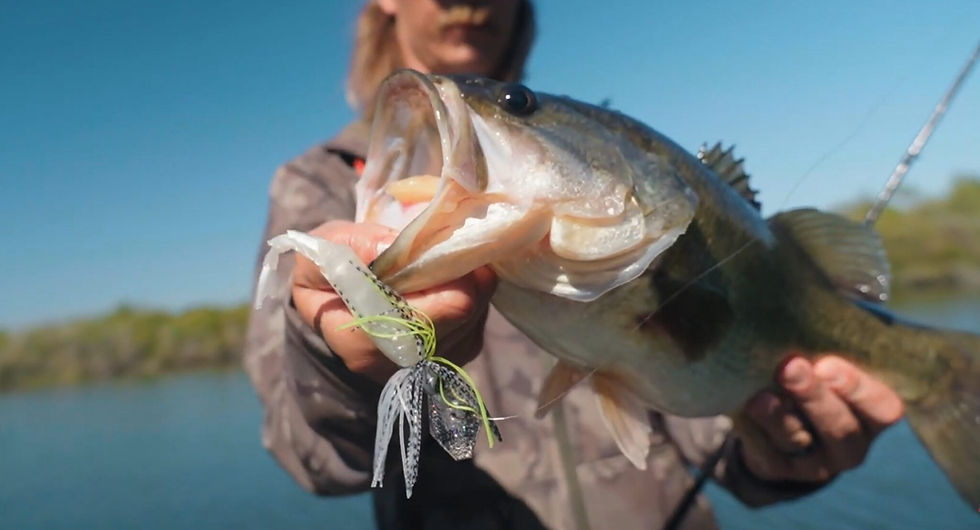
If you spend any time bass fishing, chances are you’ve heard anglers talking about “throwing a chatterbait.” A chatterbait is one of the most effective and versatile lures ever created for targeting largemouth and smallmouth bass. Known for its aggressive vibration, flashy action, and ability to trigger reaction strikes, the chatterbait has become a staple in tackle boxes across the country.
Understanding the Chatterbait
A chatterbait, also known as a bladed jig, combines features of a jig, spinnerbait, and crankbait into one lure. The defining characteristic is the metal blade attached directly to the head of the jig. As the lure moves through the water, the blade vibrates rapidly, creating both flash and strong underwater vibrations that mimic a fleeing baitfish.
Most chatterbaits consist of:
A weighted jig head
A hex-shaped metal blade
A silicone skirt
A hook for adding trailers
The combination creates a unique swimming action that fish often can’t resist.
Why Bass Love Chatterbaits
The strong vibration of a chatterbait helps bass locate the lure even in stained or muddy water. The blade creates erratic movement that imitates injured baitfish, making it an easy target for predatory fish.
Chatterbaits are especially effective because they:
Cover water quickly
Trigger reaction strikes
Work in various depths
Perform well around grass and cover
Catch fish in multiple seasons
Many anglers rely on chatterbaits during spring and fall when bass are actively feeding.
Best Conditions for Throwing a Chatterbait
One reason chatterbaits are so popular is their versatility. They can produce fish in many different situations, but they truly shine under certain conditions.
Stained or Muddy Water
The vibration helps bass find the lure when visibility is low.
Windy Days
Choppy water breaks up visibility and makes bass more aggressive.
Grass Flats
Chatterbaits excel around submerged vegetation. Ripping the bait free from grass often triggers violent strikes.
Shallow Cover
Docks, laydowns, and shoreline cover are all productive targets.
Choosing the Right Trailer
Most anglers pair chatterbaits with soft plastic trailers to enhance action and profile. Popular trailer styles include:
Paddle tail swimbaits
Craw-style plastics
Split-tail trailers
Fluke-style minnows
The trailer affects how the bait swims and falls, allowing anglers to customize presentations for different conditions.
Popular Chatterbait Colors
Color selection often depends on water clarity and forage.
Common Productive Colors
White or shad patterns for baitfish
Green pumpkin for bluegill imitation
Black and blue for dirty water
Chartreuse in stained conditions
Matching local forage usually produces the best results.
How to Fish a Chatterbait
One of the easiest ways to fish a chatterbait is with a steady retrieve. Cast the lure out and reel it back just fast enough to feel the blade vibrating.
Other effective techniques include:
Slow rolling near bottom
Burning over grass
Pumping the rod during retrieve
Pausing occasionally to create erratic action
Experimenting with retrieve speed can make a huge difference.
Best Rod and Reel Setup
A medium-heavy rod with moderate-fast action is ideal for chatterbaits. Many anglers prefer a rod around 7 feet long paired with a high-speed baitcasting reel.
Popular line choices include:
15–20 lb fluorocarbon
30–50 lb braided line around heavy grass
Why Every Bass Angler Should Own One
Few lures can match the versatility and fish-catching power of a chatterbait. Whether you’re fishing shallow grass, muddy banks, or open water baitfish schools, this lure consistently produces strikes from active bass.
For beginners, chatterbaits are easy to fish and highly effective. For experienced anglers, they offer endless ways to experiment with retrieves, trailers, and seasonal patterns.
If you’re looking for a lure that catches fish in almost any condition, a chatterbait deserves a permanent spot in your tackle box.


Càng theo dõi cm88 , mình càng thấy mỗi lần truy cập đều bổ sung thêm một góc nhìn mới. Có hôm mình chỉ xem phần giao dịch với MoMo, Vietcombank và Techcombank, hôm khác lại tìm hiểu thêm về giấy phép Isle of Man và Cagayan Economic Zone & Freeport. Sau khi ghép các thông tin lại, mình có cảm giác nền tảng được xây dựng theo nhiều lớp, trong đó mỗi yếu tố đều đóng một vai trò riêng.
Có thời gian quan sát nhiều nền tảng cùng lĩnh vực, Nhà cái hm88 để lại cho mình ấn tượng ở sự cân bằng giữa số lượng nội dung và khả năng hiển thị. Các khu vực như game bài, slot game, bắn cá và xổ số được bố trí rõ ràng giúp việc tìm kiếm diễn ra nhanh hơn mà không bị chồng chéo thông tin. Mình thấy giao diện duy trì được độ thoáng hợp lý nên việc quan sát lâu không gây mệt mắt. Trong quá trình trải nghiệm thử game bài và slot game, tốc độ tải khá ổn định, thao tác chuyển mục diễn ra mượt nên cảm giác sử dụng khá thuận tiện
Khi mình đánh giá https://f8beta8.com/ dưới góc độ cấu trúc thông tin, mình nhận thấy nền tảng này xây dựng hệ thống danh mục khá rõ ràng. Các khu vực thể thao, game bài, casino và slot được sắp xếp nhất quán giúp người dùng dễ hình dung tổng thể ngay từ những lần truy cập đầu tiên. Trong quá trình sử dụng, mình thấy việc chuyển đổi giữa các mục diễn ra mượt và không bị gián đoạn. Cách giữ bố cục ổn định giữa các trang giúp mình dễ ghi nhớ vị trí nội dung quan trọng. Điều này hỗ trợ trải nghiệm điều hướng trở nên đơn giản hơn trong quá trình sử dụng lâu dài.
Nhìn vào cách phân bổ nội dung trên https://lucky88.tours/ , mình thấy các khu vực được sắp xếp theo từng nhóm khá rõ ràng. Thể thao dành cho những người thích theo dõi sự kiện thi đấu, casino trực tiếp tập trung vào các bàn chơi thời gian thực, trong khi xổ số và nổ hũ phục vụ những nhu cầu khác nhau. Ngoài ra, hệ thống cũng dành không gian riêng cho các tiện ích hỗ trợ. Theo góc nhìn khảo sát, cách bố trí này giúp việc tiếp cận nội dung trở nên trực quan hơn.
Khi tìm hiểu cấu trúc tổng thể của https://bet88.monster/ , mình chú ý đến cách nền tảng kết nối các khu vực giải trí với nhau. Người dùng có thể chuyển từ thể thao sang casino hoặc slot mà không cần quá nhiều thao tác. Bên cạnh đó, các dữ liệu như lịch thi đấu hay thông tin Jackpot đều được hiển thị ngay trong từng khu vực. Theo quan sát của mình, hệ sinh thái được xây dựng theo hướng giúp người dùng tiếp cận nội dung nhanh hơn thay vì phải tìm kiếm qua nhiều bước.